
Getting Ahead Without Getting Dumb
Also: The best commencement speeches

Thanks for sticking with me while I took a short break from Substack. I’ve been devoting my time to a few large projects and had to pause new entries for a bit, but I’m so happy to be back.
I spent the first part of the year traveling to 20 states, working with universities, tech companies, food brands, financial institutions, and healthcare organizations.
A few themes came up everywhere I went. Below are the ones most on my mind.
The strange emptiness of AI first drafts
I coach a handful of executives on their presentations, and lately something bizarre has been showing up in the material they send me to review.
In one case, I was sent a speech that sounded polished and important, but once I stripped away unnecessary buzzwords and technical jargon, there was almost nothing there. It was the first time I had seen something that was well written and somehow also made no sense.
I knew that AI had written the presentation. Beautiful wrapping paper around a rock seems to be the hallmark of AI’s first drafts.
I also notice that the people delivering AI-written work appear particularly self-conscience. The gap between their effort and their output seems to create significant insecurity.
Dr. Marlynn Wei, a Harvard-trained psychiatrist writing a book on AI and mental health, introduced me to the concept of “cognitive surrender,” the unconscious habit of accepting generated output as your own without critical thought.
Erica Dhawan expanded on that idea in a recent essay about AI and “false wins:”
“The false win is the hollow feeling that arrives after you receive credit for work that was technically yours but cognitively borrowed. The false win is not about cheating. It is about the growing distance between what we produce and what we understand. It is the realization that you can deliver a flawless result and feel less capable afterward, not more.”
It’s a perfect storm: our brains work less when we cognitively surrender, our confidence shrinks with each false win, and AI’s generic first draft deters us from saying what we actually mean.
I write this Substack with my own brain, which is why it’s only okay. Maybe Claude would be better, but then I might become dumber, and I can’t risk it.
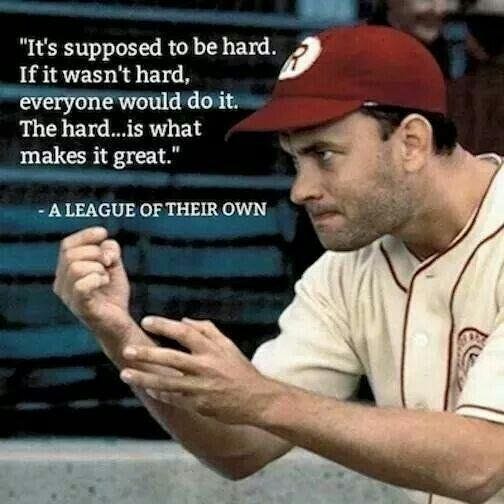
Write your own first drafts. Stare at the blank document. Try to turn nothing into something.
It’s hard.
Channel Tom Hanks.
Early-career hiring is weak, and no one agrees on why
I’ve spent a lot of time lately with recent college grads and they are understandably stressed about their job prospects.
We know early-career hiring has slowed, even as overall unemployment has stayed surprisingly low. Recent college graduates are now more likely to be unemployed than the overall working population — a reversal of the usual pattern. We don’t really know why this is happening, which has made it hard to solve.
One theory is that the slowdown is primarily a correction from the Covid-era hiring frenzy.
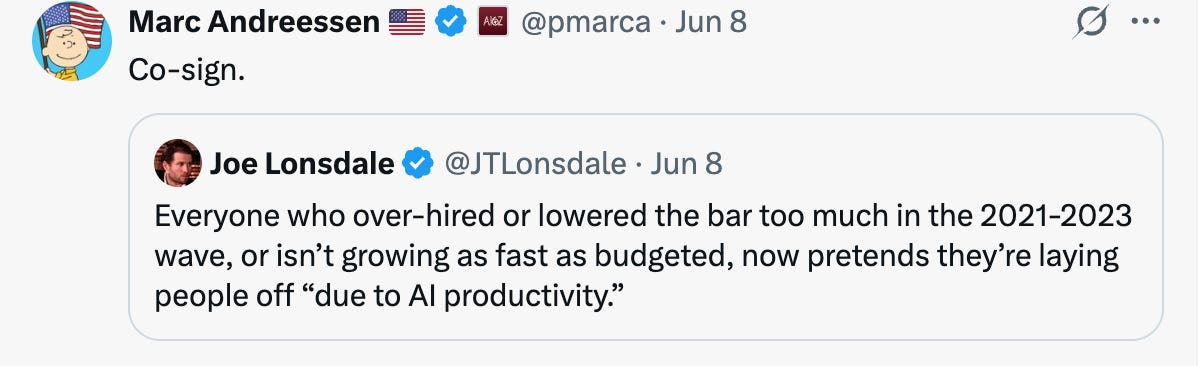
There is a reasonable argument that this is a rational response to irrational hiring.
Another theory ties the slowdown to the rise of remote work.
A new working paper argues that the post-2022 collapse in junior hiring may be partly explained by the shift to remote work. The argument is that young workers became costlier to supervise and slower to develop when they were no longer learning through proximity, observation, and informal feedback.
The paper is not yet peer reviewed, and the findings are still being debated. But I’m particularly interested in it because it reflects what I’m hearing in private conversations with executives.
In hybrid and remote workplaces, leaders are cautious about hiring entry-level employees when they know the on-ramp will require a massive lift and high-quality work may take longer to produce.
And then, of course, there’s AI.
If you’ve played around with the paid version of the latest tools, it is impossible not to see how this could affect hiring. A widely discussed Stanford study found that since the adoption of generative AI, early-career workers ages 22 to 25 in the most AI-exposed jobs experienced a double digit decline in employment, even after controlling for firm-level shocks. Employment for experienced workers in those same jobs remained stable or grew.
The hiring slowdown also coincided with tariffs, volatile interest rates, and broader uncertainty. So that is another possibility too.
This is why the problem is so hard to solve. If we don’t know the underlying cause, we don’t know what to correct for.
If AI is the primary driver of job displacement, we may need to experiment with wage subsidies, tax reform, and new education-to-work pathways. But if remote work is the bigger driver, the solution is more straightforward: better onboarding, better management, more intentional mentorship, and clearer expectations for early-career development.
Adding to the complexity is that many of these forces are tangled together. AI-exposed jobs are often also remote-work-exposed jobs. Is your head spinning yet? Same.
I’ll keep you posted as more research comes out and as companies begin to respond with better information.
In the meantime, here are a few things that I have seen help entry-level workers get hired:
Explicitly say that you’re willing to work in-person (at least some of the time, depending on the role). Not because remote work is bad, but because leaders have seen how hard it is to get an ROI on entry-level workers in remote environments. A top-of-mind question for hiring managers is “Is this person easy to train?” Answer that question quickly.
Show that you can get real value from AI while still using your own brain. You can say something like, “I like using AI to brainstorm, edit, and find efficiencies, but I still exercise my own taste and judgment, and I make a point to double-check its output for accuracy.”
When networking, make yourself easy to understand. Too often new grads position themselves as a bundle of potential: hardworking, enthusiastic, a fast learner. That vagueness makes it hard for the other person to know who to introduce you to, or which industries you’d be right for. You don’t need to know exactly what you want to do, but having some direction makes it easy for the other person to say, “I know who to introduce you to!”
Lucky for us, it’s commencement speech season, so advice is everywhere!
The best commencement speeches
Noah Baumbach, Vassar
Very few speeches today feel written for the people in the room. Oscar speeches, commencement speeches, and corporate speeches are streamed, clipped, and repackaged, so some vague audience at home becomes the real target. Baumbach’s speech felt intimate and specific. I almost felt like I was intruding just by watching it.
My favorite quote:
“ We’re always arriving, which is another way of saying we never arrive. There is no one way to do anything. While there are many brilliant people who have gone before you, and you should learn from them, it shouldn’t blunt your own intuition and sense of yourself, and the sneaking suspicion that maybe you know a thing. You have more power than you think you have. “
Eric Church, UNC-Chapel Hill
I cried through most of this one. Church turns tuning guitar strings into a metaphor for tending to the things that make life worth living. He closes by singing "Carolina" as crying students wrap their arms around each other.
My favorite quote:
“You should want things. The world has more than enough people standing at the edge of their own potential waiting for a permission slip that was never going to arrive. Want the thing and say it out loud. Build toward it with everything you have. And when you fail, and you will fail, get back up. Tune the string. Keep playing.“
Noah Eckstein, student speaker at Harvard University
Eckstein has a Muslim grandfather, a Christian grandmother, and a Jewish father. In his speech, he draws on his own family to talk about disagreement, reconciliation, and understanding, and what those lessons mean for the rest of us.
My favorite quote:
“Listen like you might be wrong.”
Recent conversations and highlights
Sena Chang at The Daily Princetonian
Sena Chang and I talked about the pressure students feel to “make the most” of Princeton. One downside of optimizing every part of life is that it can close us off to the things that do not look immediately useful: serendipity, mistakes that teach us, wrong paths that reveal the right one, and risks that do not fit neatly into a five-year plan. Read the article here.
Scotiabank Perspectives Podcast
I joined my friends at Scotiabank for a conversation about how each generation thinks about money. We talked about the headwinds and tailwinds facing Gen Z, what I would tell young people trying to build wealth, and how social media has changed our ideas of success. Listen here.
In Confidence with Lisa Sun Podcast
My friend, the brilliant author Lisa Sun, led a wide-ranging conversation about why we judge each other, how careers are actually made, and why unconventional paths are often the most rewarding. Listen here.
The Obama Presidential Center
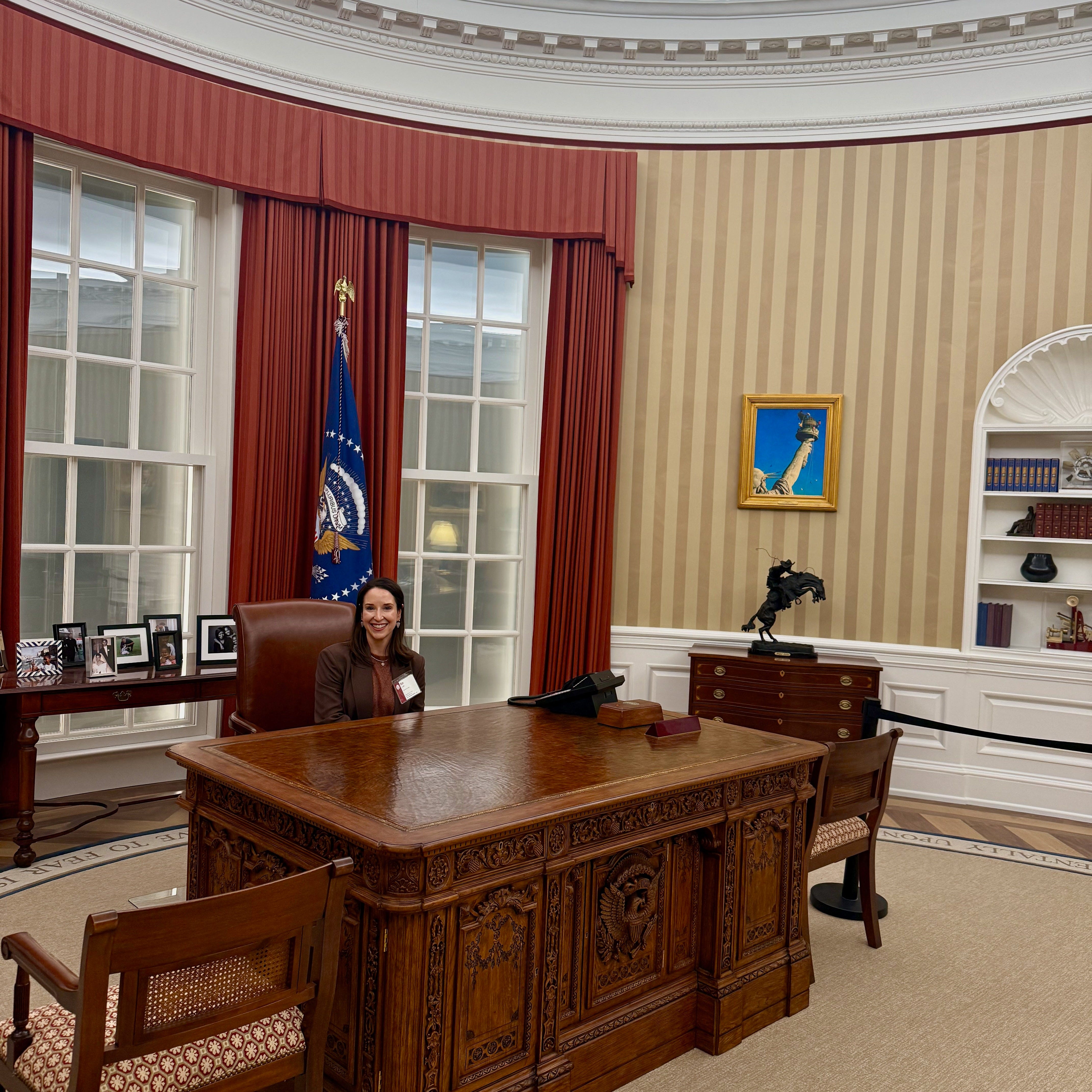
The University of Chicago graciously included me in an early tour of the Obama Presidential Center. This is a really beautiful museum. If you find yourself in Chicago, I highly recommend a visit. Yes, I did beg a distinguished professor to take a picture of me sitting in the pretend Oval Office.
Salesforce Higher Education Panel
I participated in a panel with Daniel Lim, the futurist at Salesforce, focused on the future of higher education. We discussed what students believe they are buying when they enroll in college, how AI may transform the higher ed experience, and what college is for now.
Tampa General Hospital with Dr. Thomas Lee
At Tampa General Hospital, I joined Dr. Thomas Lee, Chief Medical Officer at Press Ganey and a professor at Harvard Medical School, for a conversation about building social capital with young workers. His book, Social Capital in Healthcare, is essential reading for anyone thinking seriously about healthcare leadership.
Until next time! xo-Kim
Glad you are back writing!